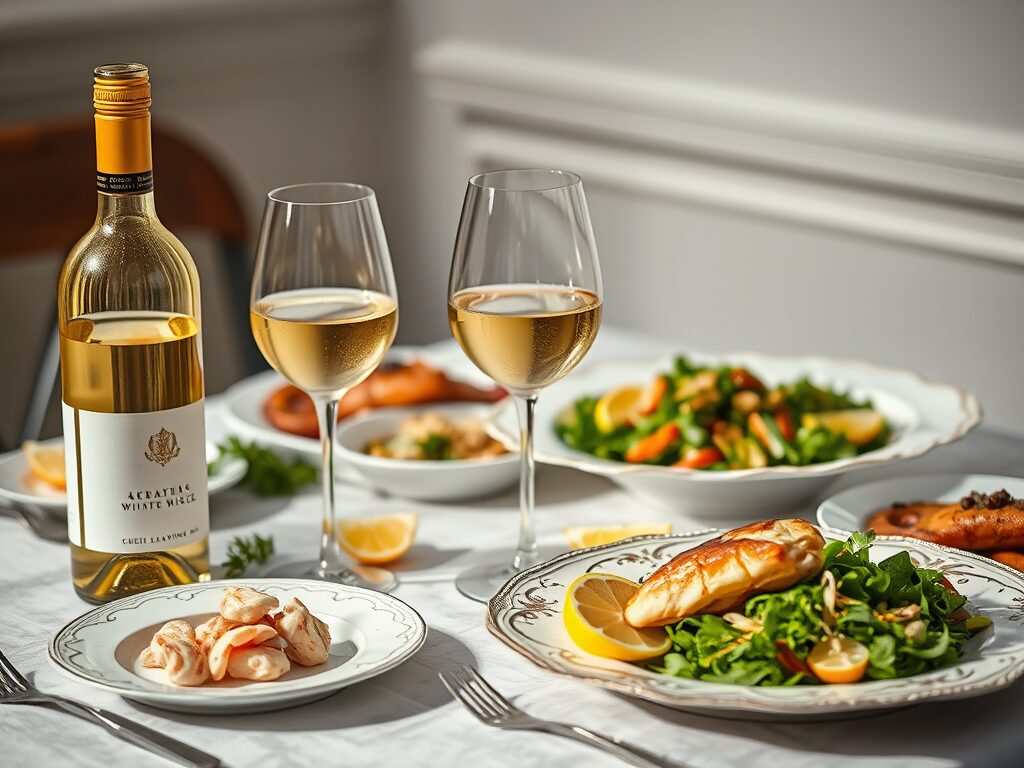
The Architecture of White Wine Pairing
The art of white wine pairing is often misunderstood as simply a matter of adhering to the “white wine with fish” adage. However, to truly elevate a culinary experience, we must examine the structural components of both the wine and the dish.
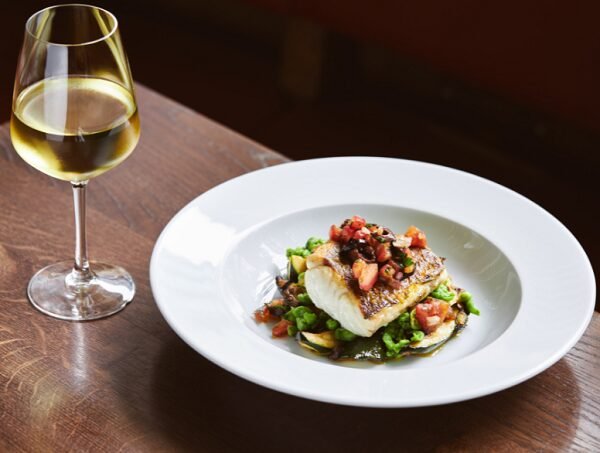
Here are the core principles:
The Common approach: Much of pairing is intuitive; lighter wines generally suit lighter fare.
Match Weight and Body: Pair light-bodied wines with delicate dishes (like raw seafood) and full-bodied, rich whites with heavier, fatty foods.
Balance Acidity: High-acid white wines act as a “palate cleanser,” cutting through rich, creamy sauces or oily fish to provide a refreshing contrast.
Consider Aromatic Intensity: Medium-bodied whites with floral or stone fruit notes harmonize well with aromatic dishes like roasted chicken or herb-forward pasta.
Complement Flavors: Look for congruent flavors, such as pairing a citrusy Sauvignon Blanc with a dish featuring a lemon-based vinaigrette.
Achieving a harmonious balance requires a deep understanding of acidity, residual sugar, alcohol content, and aromatic intensity. When we align the weight of a wine with the richness of a meal, we create a synergistic effect where neither element overpowers the other.
In this comprehensive guide, we explore the intricate chemistry of flavor profiles and the tactical application of contrast and congruence. Whether dealing with the high-acidity snap of a Sauvignon Blanc or the buttery depth of an oaked Chardonnay, the principles of pairing remain rooted in the balance of primary and secondary flavors.
The Role of Acidity in Palate Cleansing
Acidity is perhaps the most critical structural element in white wine pairing. High-acidity wines act as a palate cleanser, cutting through the density of fats and oils. We look for wines like Riesling, Albariño, or Pinot Grigio when serving dishes that feature cream-based sauces or fried textures.
- Lipid Neutralization: The sharp citrus notes and tartaric acid in a Sancerre or Pouilly-Fumé pierce through the richness of goat cheese or butter-poached scallops.
- Enhancing Saltiness: Acidity balances salinity. A crisp Vinho Verde paired with salted seafood highlights the sweetness of the protein rather than the harshness of the salt.
Weight and Texture: Matching the Body
We categorize white wines by their body—light, medium, or full. A fundamental principle is to match the weight of the wine with the density of the food.
Light-Bodied Whites
Wines such as Soave, Muscadet, and Cortese (Gavi) possess a delicate structure. We pair these with raw bar selections, light salads, and steamed white fish. The objective is to ensure the wine does not vanish behind the complexity of the dish.
Medium-Bodied Whites
Varietals like Chenin Blanc, Viognier, and Pinot Gris offer a more substantial mouthfeel. These are ideal for poultry, roasted vegetables, and herb-forward pasta dishes. The viscosity of a medium-bodied wine stands up to slightly heavier textures without the need for oak influence. Medium-bodied white wines generally have an alcohol content between 12.5% and 13.5%
Full-Bodied Whites
Oaked Chardonnay and Viognier represent the pinnacle of weight. These wines often undergo malolactic fermentation, which converts sharp malic acid into creamy lactic acid. We pair these with lobster, roasted pork, or creamy polenta. The vanilla and toasted oak notes complement the caramelization found in roasted or grilled preparations.
Main Types of White Wine
White wines are typically categorized by their “body”, the weight and feel of the wine on the palate, as well as their flavor profiles.
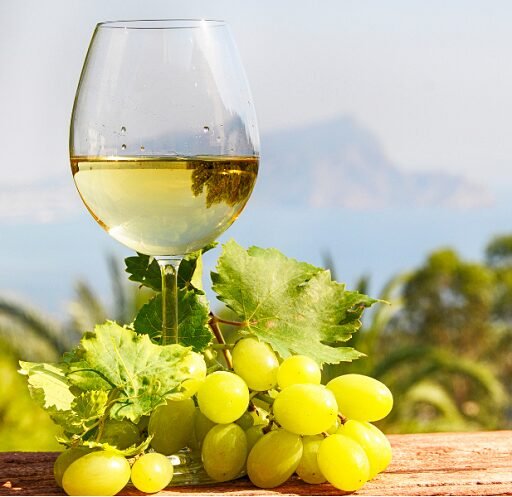
- Chardonnay: Often full-bodied; can be “oaked” (buttery, vanilla notes) or “unoaked” (crisp, apple notes).
- Sauvignon Blanc: A light-to-medium bodied wine known for its high acidity and “green” flavors like grass or gooseberry.
- Riesling: Ranges from bone-dry to very sweet; highly aromatic with notes of lime, apricot, and honey.
- Pinot Gris / Pinot Grigio: Typically light, crisp, and refreshing with citrus and mineral notes.
- Chenin Blanc: A versatile wine ranging from dry sparkling to sweet dessert styles.
- Moscato (Muscat Blanc): Known for its sweet, floral aromas and lower alcohol content
Navigating Aromatic Intensity and Spice
When pairing with spicy or highly aromatic cuisines, such as Thai, Indian, or Sichuan, we must shift our focus to residual sugar and low alcohol. High alcohol acts as a fuel to the fire of capsaicin, making a dish feel unpleasantly hot. Instead, we utilize off-dry wines.
- The Sugar Buffer: A German Kabinett Riesling or an off-dry Gewürztraminer provides a sugar coat to the palate, which mitigates the heat of chili peppers.
- Floral Congruence: The lychee and rose petal aromas of Gewürztraminer harmonize with the ginger, lemongrass, and galangal frequently found in Southeast Asian cooking.
The Interaction of Sweet and Savory
We often encounter the challenge of pairing wine with dishes that possess a sweet component, such as fruit glazes or honey-roasted vegetables. The golden rule here is that the wine must be sweeter than the food. If the dish is sweeter than the wine, the wine will taste bitter and thin.
For savory dishes with sweet hints, we recommend Chenin Blanc from the Loire Valley (Vouvray) or a Demi-Sec Riesling. The inherent fruitiness and slight sugar content bridge the gap between the savory proteins and the sweet accents.
Specific Pairing Matrices for Common Ingredients
To provide a more granular look at pairing, we have developed a matrix based on common primary ingredients:
| Ingredient | Recommended Varietal | Why it Works |
| Oysters | Muscadet Sèvre et Maine | High salinity and mineral “lees” contact mimic the ocean brine. |
| Grilled Asparagus | Sauvignon Blanc | The pyrazines (herbaceous notes) in both wine and vegetable align. |
| Roasted Chicken | Chardonnay (Lightly Oaked) | The wine’s body matches the succulent texture of the poultry. |
| Thai Green Curry | Riesling (Spätlese) | Low alcohol and high sugar balance the intense green chili heat. |
| Soft Cheeses | Sancerre | The high acidity cuts through the high fat content of the rind. |
The Impact of Cooking Methods on Wine Selection
The way a dish is prepared can fundamentally change its pairing requirements. We do not just pair with the protein; we pair with the preparation.
- Poaching and Steaming: These methods preserve the delicate nature of the ingredient. We favor light-bodied, high-acid wines like Pinot Grigio or Chablis.
- Sautéing and Frying: These introduce fats. We move toward medium-bodied whites with enough acidity to refresh the palate, such as Albariño.
- Grilling and Roasting: These introduce smoky, charred, and caramelized flavors. We require wines with oak aging or skin contact (orange wines) to provide enough tannin and structure to match the intensity.
Regionality: The “What Grows Together, Goes Together” Rule
We find that some of the most successful pairings are geographical. Centuries of viticulture and culinary evolution have led to natural harmonies within specific regions.
- Coastal Pairings: Vermentino from the coast of Tuscany or Assyrtiko from Santorini are naturally suited to Mediterranean seafood. The salty sea air influences the grapes, creating a “pre-paired” mineral profile.
- Continental Pairings: The Grüner Veltliner of Austria is the perfect companion for Wiener Schnitzel. Its white pepper notes and racy acidity slice through the breaded veal perfectly.
Advanced Concepts: Phenolics and Texture
Beyond flavor, we must consider mouthfeel. Some white wines, particularly those with skin contact or those made from thicker-skinned grapes like Pinot Gris, contain phenolic compounds (tannins). These provide a slight “grip” on the tongue.
When serving dishes with chewy textures, such as octopus or firm tofu, a wine with a bit of phenolic bitterness can provide a structural counterpoint that a smooth, buttery wine cannot. This is where Northern Italian whites or Spanish Garnacha Blanca excel.
Temperature Management for Optimal Pairing
We cannot overlook the importance of service temperature. A white wine served too cold will mask its aromatic complexity, making a pairing feel dull. Conversely, a wine served too warm will emphasize alcohol and flabbiness.
- Crisp, Light Whites: 7–10°C (45–50°F).
- Rich, Oaked Whites: 10–13°C (50–55°F).
- Aromatic, Off-Dry Whites: 8–11°C (47–52°F).
By adjusting the temperature, we ensure the volatiles are released at the correct rate to interact with the food’s steam and aromas.
Conclusion: The Synergy of the Table
In conclusion, the principles of white wine pairing are a balance of science and intuition. By focusing on the structural interplay of acidity, weight, and sweetness, we can move beyond basic rules and create sophisticated, memorable dining experiences. We encourage a focus on the sauce and preparation as much as the primary protein, ensuring that every sip and every bite are in perfect alignment.