The Idiot’s Guide to Smoked Food Wine Pairings
This smoked food and wine pairing guide is the essential resource for backyard pitmasters looking to elevate their BBQ game beyond beer. Simple, practical, and aimed at the complete beginner, showcasing the best way to enhance your taste palate.
I want to get straight to the point, so I have provided the easiest key points for wine and food pairing when using a smoker.
I always explain that you should think of food and wine pairing like a see-saw. To have the most fun, both sides need to be balanced!
Introduction: Why Wine for Smoked Food?
Beer is classic with BBQ, but wine unlocks a broader flavor palette. Smoked foods are about smoke, fat, spice, and caramelized sugars. Wine brings acidity, tannin, fruit, and sweetness to balance and lift those elements.
This “complete idiot’s Guide to Smoked Food Wine Pairing” gives straightforward rules, clear pairings, and cheat sheets so you can stop guessing and start serving confident, delicious combinations.
How Exactly, Does Pairing Work?
The science starts with five main tastes: salt, sweet, umami (savory), bitter, and sour.
Smoked foods have very LOUD, intense flavors. If you pair a really sour wine with super smoky food, they might start a “war” in your mouth, which tastes icky.
They complement each other in two ways:
The Cleanup Crew: Smoked meats are often fatty or salty. Some wines have bubbles or acidity that act like a little scrub brush for your tongue, cleaning off the heavy fat so the next bite tastes just as good as the first!
Matching Strengths: A “bold” food like smoked brisket needs a “bold” wine like Zinfandel so the meat doesn’t “bully” the taste of the wine.
Quick Rules for Idiots (Simple Pairing Principles)
- Match intensity: mild smoke = light-bodied wine; heavy smoke = fuller-bodied wine.
- Use acidity to cut fat: pick wines with good acidity for fatty meats (brisket, pork belly).
- Tannin interacts with smoke and fat: medium tannin is ideal for big reds with charred beef.
- Sweetness/Sauce matching: sweet or sticky sauces pair well with off-dry or fruity wines.
- Complement or contrast flavors: complement smoky and savory with earthy or fruity notes; contrast fatty richness with high-acid or sparkling wines.
Basic Wine Types And What You Need to Know
- Sparkling (Champagne, Cava, Prosecco): High acidity, effervescence, great for fatty and salty smoked foods.
- Whites (Sauvignon Blanc, Chardonnay, Riesling): Acidity and fruit. Unoaked whites are bright; oaked Chardonnay adds richness and vanilla notes that can match smoky, buttery dishes.
- Rosé: Versatile, fruity, and medium-bodied. Excellent with smoked chicken, salmon, and pork.
- Light Reds (Pinot Noir, Gamay): Lower tannin, bright acidity, red fruit are good for salmon, pork, and lighter smoked fare.
- Medium to Full Reds (Zinfandel, Syrah/Shiraz, Malbec, Cabernet): More body and tannin for beef, lamb, and heavily smoked meats.
- Sweet/Off-Dry (Aromatic Riesling, Gewürztraminer): Balance spice and glaze; great with spicy rubs and sweet sauces.
Flavor Map: Match Smoke, Sauce, Meat, Wine
Think in three parts: smoke intensity, rub/sauce flavor, and meat richness.
- Light smoke + lean meat (smoked chicken breast, turkey): Crisp white, rosé, or light red.
- Moderate smoke + sweet or vinegar-based sauce (pork ribs): Off-dry Riesling, Zinfandel, or fruity rosé.
- Heavy smoke + fatty red meat (brisket, beef ribs): Powerful reds like Syrah, Malbec, or California Zinfandel with moderate tannin.
- Smoked fish (salmon, trout): Pinot Noir, dry Riesling, or sparkling wine.
- Smoked vegetables/cheese: Sparkling or herbaceous whites; consider Sauvignon Blanc or Chenin Blanc.
Specific Pairings With A Ready-to-Use Cheat Sheet
- Smoked Brisket (heavy smoke, fatty): Syrah/Shiraz, Malbec, or Cabernet blend. If the sauce is sweet, try Zinfandel or a fruit-forward GSM blend (Grenache-Syrah-Mourvèdre).
- Beef Ribs (char, fat): Bold Zinfandel or Cabernet Sauvignon. For peppery rubs, pick Syrah for its peppery notes.
- Pulled Pork (smoked, sweet or vinegar sauce): Off-dry Riesling, Beaujolais (Gamay), or a medium-bodied Zinfandel.
- Pork Ribs (sweet BBQ sauce): Off-dry Riesling, Rosé, or fruit-forward Zinfandel.
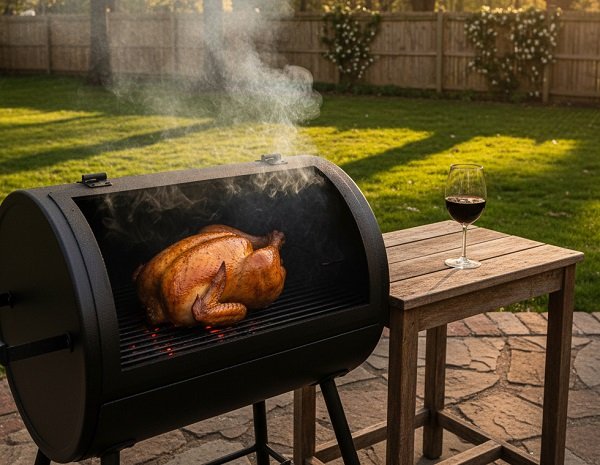
- Smoked Chicken (whole or thighs): Chardonnay (unoaked or lightly oaked), Pinot Noir, or rosé.
- Smoked Turkey: Sparkling wine, Sauvignon Blanc, or medium-bodied Pinot Noir.
- Smoked Salmon: Pinot Noir (light, chilled a touch), dry Riesling, or Champagne/sparkling.
- Smoked Trout or White Fish: Dry Riesling, Grüner Veltliner, or sparkling.
- Smoked Sausage (spicy or smoked links): Off-dry Gewürztraminer, Zinfandel, or Rioja.
- Smoked Lamb: Syrah, Rioja (Tempranillo) or Malbec.
- Smoked Pork Belly (fatty, rich): Sparkling wine, Champagne, or high-acid white like Chablis-style Chardonnay.
- Smoked Cheese (sharp cheddar, gouda): Sparkling, Riesling, or Cabernet for aged cheddars.
Special Cases: Sauce Types
- Tomato-based, tangy: Choose wines with acidity, Sangiovese, Chianti, or medium-bodied reds.
- Sweet/glazed (honey, molasses): Off-dry whites, fruity reds (Zinfandel), or sparkling rosé.
- Spicy rubs (chili, cayenne): Off-dry aromatic whites (Riesling, Gewürztraminer) to calm heat; fruity reds if not too spicy.
- Vinegar-based (Carolina-style): High-acid whites or light reds (Sauvignon Blanc, Beaujolais).
Practical Tips for Backyard Pitmasters
- Serve temperatures matter: Reds slightly cool (55–65°F/13–18°C), whites chilled (45–55°F/7–13°C), sparkling well chilled (40–50°F/4–10°C).
- Start with lighter wines: If serving multiple courses, progress from light to heavier-bodied wines.
- Glassware: Use appropriate glasses when possible—white wine glasses for whites, large-bowled for full reds, flutes or universal glasses for sparkling.
- Buy by flavor, not price: You can find excellent value wines that fit the flavor profile; ask for fruit-forward vs. oak-forward when in doubt.
- Make a pairing flight: Offer 2–3 wines per meat so guests can taste comparisons (e.g., Riesling vs. Zinfandel with ribs).
- Balance the smoky factor in cooking: Less aggressive smoke allows more delicate wines; heavy smoke calls for bolder wine choices.
Easy Shopping List for a Backyard Pairing Party
- Sparkling wine (Cava or Prosecco) — 1 bottle per 4 guests for starters.
- Dry Riesling — 1 bottle for spicy/smoky fish or pork ribs.
- Pinot Noir — 1 bottle for smoked salmon and lighter meats.
- Zinfandel or Syrah — 1–2 bottles for brisket and ribs.
- Rosé — 1 bottle for versatile pairing across pork and poultry.
Common Mistakes and How to Avoid Them
- Picking a super-oaked, buttery wine for highly smoked, peppery beef can clash. Choose fruit-forward or peppery reds instead.
- Ignoring sweetness in sauces, sweetness needs a counterbalance: off-dry wine or fruit-forward red.
- Serving everything too warm, chilled whites, and light reds properly.
- Overcomplicating pairings, stick to the intensity and acid/tannin rules if unsure.
Quick Pairing Scenarios (If You Only Remember One Thing)
- Smoky, fatty beef → medium-full tannic red (Syrah, Malbec, Zinfandel).
- Sweet-sauced pork ribs → off-dry Riesling or fruit-forward red (Zinfandel).
- Smoked salmon → Pinot Noir or dry Riesling or Champagne.
- Smoked chicken/turkey → Chardonnay, rosé, or light red.
Final Words: Confidence Over Perfection
This idiot’s guide to smoked food wine pairings is about removing fear and replacing it with simple, repeatable rules. Start with intensity, use acidity to cut fat, and match sweetness to sweetness. Taste as you go, and make small adjustments. Wine opens a new dimension to BBQ; your backyard smoking will never be just about beer again.
Produced for backyard pitmasters: your quick roadmap to pairing wines with smoked foods. Try a few combos, keep notes, and refine your go-to list.