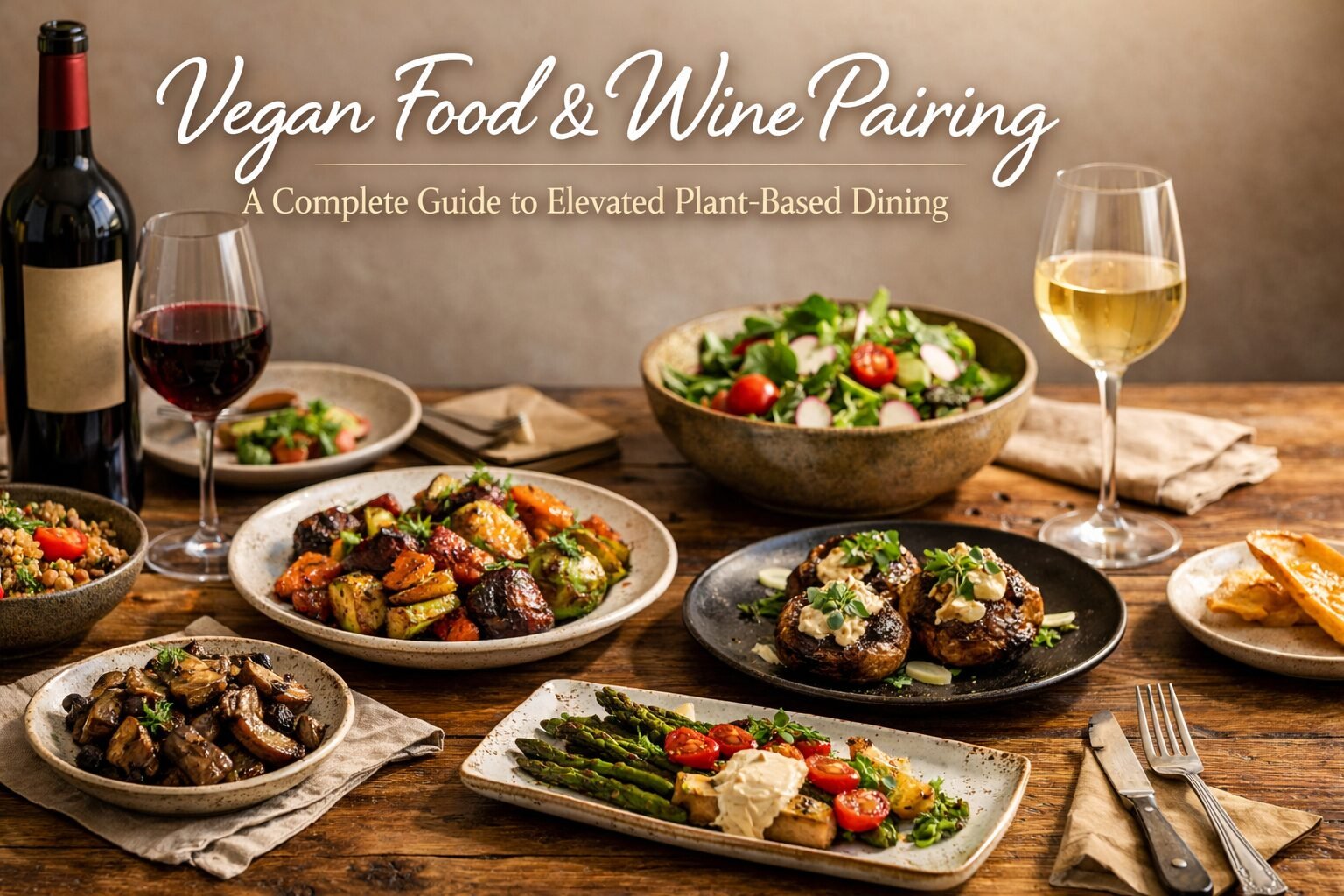
Vegan Food & Wine Pairing – Sophisticated Plant-Based Wine Pairing
The Time Has Come to Embrace Vegan Food & Wine Pairing
While pairing wine with food was traditionally discussed in terms of meats, fish, and cheeses, the development of modern plant-based cuisine allows us to explore a whole new universe of wine pairing opportunities.
Unlike traditional cuisine, where a good meal can ruin the taste of the wine, and vice versa, vegan wine pairing allows you to experience a variety of flavors in the fullest way possible. We are happy to present our guide, which will be your key to understanding vegan wine pairing.
Understanding Basic Principles of Vegan Wine Pairing
Although many believe that the concept of vegan food and wine pairing implies choosing only organic wines, the truth is quite different. The fact is that conventional winemaking includes various fining agents based on milk, eggs, gelatin, and isinglass. Even though none of these substances remain in the drink, for vegans, they are still a matter of concern. When buying wines, look for the following options:
- Wine with vegan certification
- Use fining agents as an alternative to those mentioned above (clay, carbon, and plant-based agents)
- If a wine is not certified, check the winery’s website for vegan-friendly production details
Wineries like Frey Vineyards, Bonterra Organic Estates, and other natural wine makers clearly state whether they produce vegan wines.
Key Flavor Principles for Pairing
To be honest, the principles of vegan wine pairing do not differ much from those of classic pairing. Here are some basic considerations:
- Choose light wine for light preparations and heavier wine for rich dishes
- Match aromatic profiles between wine and food
- Use contrast (especially acidity vs richness)
- Consider umami-heavy ingredients like tomatoes, legumes, miso, and soy
White Wine Pairings for Vegan Dishes
Sauvignon Blanc for Herbaceous and Fresh Dishes
In order to achieve maximum satisfaction from tasting both a wine and the dish, consider pairing Loire Valley Sauvignon Blanc with vegan food rich in herbs and citrus.
Examples:
- Tabbouleh with parsley, mint, and lemon
- Avocado and cucumber gazpacho with herb oil
- Asparagus and pea risotto with lemon zest and chives
- Spring rolls with Vietnamese herbs and tamarind sauce
The acidity balances avocado and olive oil, while herbal notes enhance the dish.
Burgundian Chardonnay for Root Vegetable Preparations
White Burgundy, especially from Côte de Beaune, offers complexity with restrained oak and stone fruit notes.
Best pairings:
- Roasted cauliflower steak with miso-tahini glaze
- Butternut squash velouté with hazelnut oil
- Polenta with wild mushrooms and thyme
- Cashew cream pasta with roasted garlic and leeks
Its creamy texture complements plant-based sauces beautifully.
Grüner Veltliner for Asian Vegan Dishes
This Austrian white shines with spice, acidity, and vegetal notes, making it ideal for Asian cuisine.
Best pairings:
- Miso-glazed eggplant
- Tofu pho with star anise and cinnamon
- Pad Thai with tofu and tamarind
- Edamame dumplings with soy-ginger sauce
Red Wine Pairings for Vegan Dishes
Pinot Noir for Mushroom Preparations
Pinot Noir is one of the most versatile wines for vegan cuisine, especially mushroom-based dishes.
Top pairings:
- Mushroom bourguignon
- Mushroom Wellington
- Truffle arancini
- Lentil and mushroom shepherd’s pie
- Beet salad with walnuts and balsamic
Recommended regions: Burgundy, Oregon (Willamette Valley), New Zealand (Central Otago)
Syrah and Grenache for Smoky and Spicy Dishes
These Rhône varieties bring bold fruit, spice, and smoky notes.
Great matches:
- Black bean and sweet potato tacos
- Baba ganoush with pomegranate molasses
- Harissa-roasted carrots with chickpeas
- Jackfruit barbecue
- Lentil merguez with red pepper sauce
Try Crozes-Hermitage or Gigondas.
Sangiovese and Nebbiolo for Tomato-Based Dishes
High acidity makes these Italian wines ideal for tomato-heavy recipes.
Perfect pairings:
- Spaghetti arrabbiata
- Vegan puttanesca
- Ribollita soup
- Vegan eggplant parmigiana
- Lentil Bolognese
Look for Chianti Classico Riserva or Langhe Nebbiolo.
Sparkling Wine Pairings for Vegan Starters
Champagne and Other Sparkling Wines
Sparkling wines cleanse the palate and enhance umami-rich dishes.
Excellent pairings:
- Vegan blinis with cashew cream and nori caviar
- Tempura vegetables with ponzu
- Crispy polenta cakes with tomatoes
- White bean crostini with truffle oil
Blanc de Blancs suits lighter dishes, while Blanc de Noirs works for richer bites.
Rosé Wine Pairings for Summer Dishes
Provence Rosé and Mediterranean Cuisine
Dry, pale rosé pairs effortlessly with Mediterranean flavors.
Try with:
- Ratatouille
- Vegan Niçoise salad
- Socca with tapenade
- Stuffed tomatoes with quinoa and herbs
Natural and Biodynamic Wines for Vegan Diners
Natural and biodynamic wines align closely with vegan values. They are typically made without synthetic chemicals or animal-based fining agents.
Look for certifications like:
- Demeter
- Biodyvin
Notable producers include Domaine de la Romanée-Conti, Domaine Leflaive, and Zind-Humbrecht.
Seasonal Wine Pairing for Vegans
A seasonal approach enhances both food and wine:
- Spring: Verdejo, Vermentino, unoaked Chardonnay
- Summer: Provence rosé, Barbera d’Asti, chilled Beaujolais
- Autumn: Pinot Noir, white Burgundy, orange wine
- Winter: Barolo, Hermitage, Rioja Reserva
Your Vegan Wine Cellar: Essential Wines to Have
Build a versatile collection with:
- White Burgundy (Meursault, Puligny-Montrachet, or Mâcon)
- Sauvignon Blanc (Loire or Marlborough)
- Grüner Veltliner (Wachau)
- Champagne or Crémant
- Pinot Noir (Burgundy, Oregon, or New Zealand)
- Rhône blend (Syrah/Grenache)
- Sangiovese (Chianti Classico Riserva)
- Provence rosé
- Natural or biodynamic wine
Vegan Cooking at Its Best
Vegan food and wine pairing does not require extra effort. Plant-based cuisine offers countless opportunities to explore new flavor combinations and elevate dining experiences. With the right approach, every meal can become a refined and memorable pairing experience.